
Watermaker Maintenance and Troubleshooting for Fort Lauderdale Yacht Owners
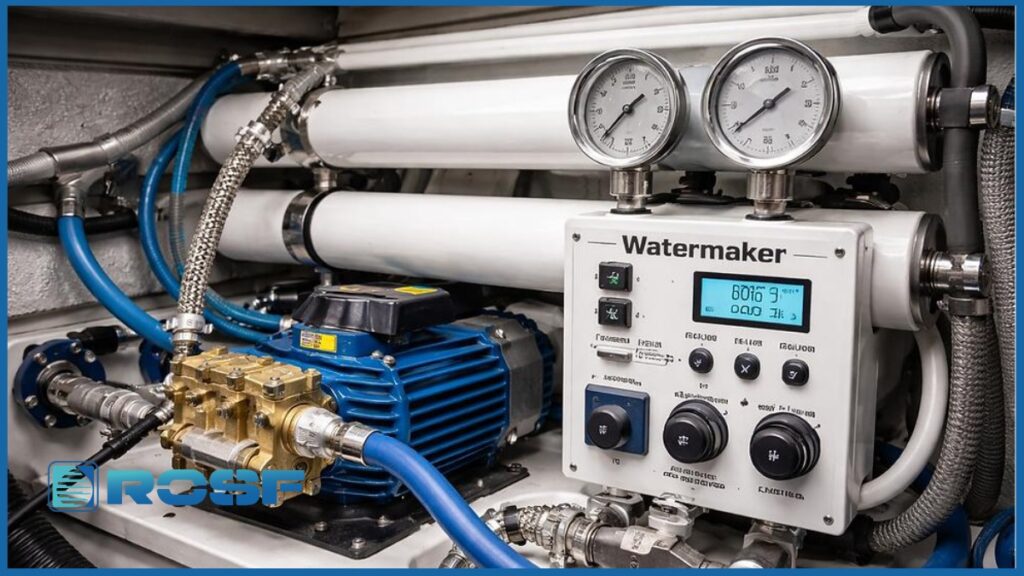
For yacht owners in Fort Lauderdale, a dependable watermaker is an important part of maintaining comfort, convenience, and independence on the water. Whether cruising along the South Florida coastline, preparing for a trip to the Bahamas, or operating a luxury yacht with substantial freshwater demands, a properly functioning marine watermaker helps ensure a consistent supply of fresh water for everyday onboard activities.
However, marine watermakers operate in demanding environments. Saltwater exposure, changing seawater conditions, mechanical wear, and periods of inactivity can all affect system performance. Without proper maintenance, even high-quality equipment can experience reduced freshwater production, filtration problems, or unexpected failures.
Understanding basic watermaker maintenance and troubleshooting can help yacht owners and captains recognize developing problems, protect valuable equipment, and determine when professional service is needed.
For vessels based in Fort Lauderdale and throughout South Florida, a proactive approach to watermaker care can help maintain reliable freshwater production and reduce the risk of inconvenient breakdowns during cruising.
Why Watermaker Maintenance Matters for Fort Lauderdale Yachts
Fort Lauderdale is one of South Florida’s major yachting centers, with vessels ranging from recreational boats to large luxury yachts and superyachts. Many of these vessels depend on marine watermakers to support showers, galley operations, laundry, cleaning, and other freshwater requirements.
A marine watermaker uses reverse osmosis technology to convert seawater into fresh water. During operation, seawater passes through intake and filtration components before reaching a high-pressure membrane system that separates fresh product water from concentrated seawater.
Each component must operate within its intended specifications to maintain proper system performance.
Routine maintenance helps protect these components and supports several important objectives:
- Maintaining consistent freshwater production.
- Reducing unnecessary wear on pumps, valves, and membranes.
- Identifying filtration restrictions before they cause larger problems.
- Supporting proper product water quality monitoring.
- Reducing the likelihood of unexpected equipment failures.
- Helping extend the useful service life of the watermaker.
For yacht owners who regularly travel offshore, maintaining a dependable freshwater supply is particularly important because immediate service assistance may not always be available.
Our article explaining why regular watermaker servicing is essential explores the long-term benefits of preventive maintenance in greater detail.
Understanding the Main Components of a Marine Watermaker
Before troubleshooting a watermaker, it helps to understand the major components involved in freshwater production.
Although equipment configurations vary by manufacturer and model, most marine reverse osmosis systems include several essential elements.
Seawater Intake and Strainers
The seawater intake supplies the watermaker with the feedwater required for operation. Strainers help prevent larger debris from entering the system.
Restrictions caused by debris, marine growth, or other obstructions can reduce incoming water flow and interfere with normal operation.
Marine Water Filters
Pre-filtration equipment removes suspended particles before seawater reaches sensitive pumps and reverse osmosis membranes.
These filters are essential for helping reduce particulate contamination and supporting consistent water flow.
Different systems require different filter specifications, so replacement cartridges should always match the manufacturer’s requirements.
For more information about filtration equipment, read our guide to choosing the right marine water filters for boats and yachts.
High-Pressure Pump and Related Components
The high-pressure stage creates the operating conditions required for reverse osmosis desalination.
Pumps, valves, seals, and pressure-related components must function correctly to maintain appropriate system performance.
Unusual noises, leaks, or pressure fluctuations may indicate a problem requiring inspection.
Reverse Osmosis Membranes
Reverse osmosis membranes separate most dissolved salts and many other impurities from incoming seawater.
Membrane performance can be affected by scaling, fouling, improper operating conditions, chemical exposure, and inadequate preservation during periods of inactivity.
Proper monitoring and maintenance help protect these critical components.
Monitoring and Control Equipment
Modern watermakers often incorporate gauges, sensors, salinity monitoring, and automated controls.
These components help operators monitor system performance and identify conditions that require attention.
Understanding normal operating readings can make it easier to recognize developing problems before they result in a complete shutdown.
1. Monitor Freshwater Production Regularly
One of the most useful maintenance practices is monitoring how much fresh water the system produces under normal operating conditions.
A watermaker’s actual production rate can vary with seawater temperature, salinity, membrane condition, and operating pressure. For this reason, a gradual change in output does not always indicate a mechanical failure.
However, a significant or persistent reduction in freshwater production deserves attention.
Yacht owners and captains should become familiar with the watermaker’s normal production rate and compare current readings with previous operating records under similar conditions.
If output begins to decline, possible causes may include restricted filters, insufficient feedwater flow, membrane fouling, or pressure-related problems.
Monitoring production trends can help identify problems early and provide useful information to a marine watermaker service technician.
2. Inspect and Replace Marine Water Filters
Marine water filters play an important role in protecting the watermaker’s internal components.
Over time, sediment and other suspended particles can accumulate within filter cartridges, restricting water flow and increasing pressure loss.
When filters become excessively restricted, the system may experience reduced performance or operating alarms.
Routine filter maintenance should include:
- Checking filter condition according to manufacturer recommendations.
- Monitoring pressure differences where appropriate gauges are installed.
- Replacing cartridges at the recommended service interval or when operating conditions indicate replacement is needed.
- Using filters with the correct specifications for the equipment.
- Inspecting filter housings and seals for damage or leaks.
Filter maintenance should be performed only after the equipment has been safely shut down, isolated, and depressurized according to the manufacturer’s procedures.
For yacht owners in Fort Lauderdale, proper marine water filtration is especially important when vessels operate in waterways or marina environments where suspended material may vary considerably.
3. Watch for Changes in Operating Pressure
Watermaker operating pressure is another important indicator of system performance.
Marine reverse osmosis systems are designed to operate within specific pressure ranges established by the equipment manufacturer.
Abnormal pressure readings may result from several conditions, including restricted filters, inadequate seawater supply, pump problems, or membrane-related issues.
Pressure changes should always be evaluated in the context of the particular system and its normal operating specifications.
Operators should never attempt to compensate for poor performance by increasing pressure beyond manufacturer limits.
Marine watermakers contain high-pressure components that can present serious hazards if handled incorrectly.
If pressure readings are abnormal or the equipment repeatedly shuts down, professional inspection is generally the safest approach.
4. Check Product Water Quality
Freshwater production volume is only one measure of watermaker performance. The quality of the water being produced is equally important.
Marine watermakers commonly use conductivity or salinity monitoring equipment to help evaluate the amount of dissolved salts remaining in product water.
Unexpected changes in product water quality can indicate membrane problems, incorrect operating conditions, or issues with monitoring equipment.
Many systems include controls designed to prevent product water that exceeds a specified salinity threshold from entering freshwater storage tanks.
These controls should be maintained and tested according to manufacturer recommendations.
It is important to understand that a satisfactory salinity reading does not, by itself, establish that water is microbiologically safe for drinking.
Potable water systems also require appropriate sanitation, storage practices, and testing where necessary.
If product water quality becomes questionable, the water should not be directed into drinking-water storage until the issue has been evaluated and corrected.
5. Follow Proper Flushing and Preservation Procedures
One of the most overlooked aspects of marine watermaker maintenance is managing periods when the equipment is not operating.
Watermakers that remain idle for extended periods may be vulnerable to biological growth and other forms of contamination within the system.
Many marine watermakers incorporate freshwater flushing procedures intended to reduce residual seawater within certain components after operation.
However, flushing requirements vary depending on the equipment and manufacturer.
Some systems also require specific preservation procedures when they will remain unused beyond a recommended interval.
These procedures may involve manufacturer-approved preservation solutions and carefully controlled handling of the membranes.
Improper chemical use can damage reverse osmosis membranes or create unsafe conditions.
Yacht owners should follow the equipment manufacturer’s exact flushing and preservation instructions rather than applying a universal procedure to every watermaker.
For Fort Lauderdale vessels that remain docked between seasonal trips, establishing an appropriate maintenance schedule can be especially beneficial.
6. Inspect Pumps, Hoses, and Connections
Watermakers contain mechanical and plumbing components that are exposed to vibration, pressure, saltwater, and normal operating wear.
Routine visual inspections can help identify potential problems before they interfere with system operation.
Common concerns include:
- Visible leaks around accessible fittings or housings.
- Corrosion on external components.
- Damaged or deteriorating hoses.
- Loose equipment mounting hardware.
- Unusual vibration or operating noise.
- Signs of moisture near electrical components.
Operators should avoid touching or adjusting pressurized connections while the system is operating.
High-pressure leaks may not always be immediately obvious and can cause serious injury.
Any suspected high-pressure leak, damaged pressure-rated component, or electrical hazard should be addressed by a qualified technician.
7. Maintain a Watermaker Service Log
Keeping accurate maintenance records can make troubleshooting more efficient and help identify performance trends over time.
A simple service log may include:
- Dates and hours of watermaker operation.
- Freshwater production readings.
- Operating pressure and other relevant measurements.
- Product water salinity or conductivity readings.
- Filter replacement dates.
- Flushing and preservation activities.
- Previous repairs and professional service visits.
These records can be particularly valuable for larger yachts with multiple crew members responsible for operating and maintaining onboard equipment.
When a problem develops, a technician can review the system’s history rather than relying entirely on the symptoms observed during a single inspection.
Consistent documentation also helps yacht owners plan maintenance around cruising schedules and equipment service intervals.
Common Watermaker Problems and What They May Indicate
Even with routine maintenance, marine watermakers can occasionally experience operating problems.
Understanding common symptoms can help yacht owners recognize when additional inspection is necessary.
Watermaker Producing Less Fresh Water Than Normal
Reduced freshwater production may be associated with restricted pre-filters, inadequate seawater supply, changes in feedwater conditions, membrane fouling, or pump-related problems.
Comparing current operating readings with historical performance can help determine whether the change is gradual or unexpected.
Because several conditions can produce similar symptoms, a proper diagnosis should evaluate the complete system.
Watermaker Will Not Start
A watermaker that fails to start may have an electrical supply problem, an active safety interlock, a control-system fault, or another condition preventing normal operation.
Operators may review visible status indicators and manufacturer-approved diagnostic information, but electrical repairs and bypassing safety controls should be left to qualified professionals.
Watermaker Shuts Down Unexpectedly
Unexpected shutdowns may occur when the system detects abnormal operating pressure, inadequate feedwater supply, electrical faults, or other conditions outside its intended operating range.
Repeatedly restarting equipment without identifying the cause may lead to additional damage.
Any persistent shutdown condition should be investigated before normal operation resumes.
Product Water Salinity Is Too High
Elevated product water salinity can be associated with membrane deterioration, improper operating conditions, sealing problems, or instrument-related issues.
When product water quality is outside acceptable limits, the system should not be allowed to introduce that water into freshwater storage.
A professional evaluation can help determine whether the problem requires maintenance, calibration, component replacement, or membrane service.
Unusual Noise or Vibration
Unexpected mechanical noise or vibration may indicate pump problems, inadequate feedwater supply, mounting issues, or other equipment concerns.
Because abnormal vibration can sometimes signal a developing mechanical problem, it should not be ignored.
For additional warning signs, visit our article on 7 signs your boat’s watermaker needs service or repair.
Preparing Your Watermaker for a Bahamas or Caribbean Voyage
Many Fort Lauderdale yacht owners use South Florida as a departure point for cruising to the Bahamas, Caribbean, and other offshore destinations.
Before beginning an extended voyage, checking the condition of the watermaker can help reduce the risk of freshwater production problems while away from port.
Pre-departure planning should include reviewing the manufacturer’s recommended maintenance schedule, inspecting accessible filtration equipment, and confirming that the system operates normally.
It is also useful to review freshwater production records and verify that product water quality monitoring is functioning as intended.
Depending on the vessel and itinerary, carrying appropriate replacement filter cartridges and manufacturer-recommended spare parts may be beneficial.
Operators should also consider where the watermaker will be used. Seawater near marinas, fuel docks, industrial areas, or polluted waterways may contain contaminants that conventional marine filtration systems are not designed to remove.
Watermaker operation should follow manufacturer guidance regarding feedwater conditions and should avoid visibly contaminated water or locations where fuel, oil, or chemical pollution may be present.
Preparing the equipment before departure allows owners and captains to address maintenance needs while professional service and replacement parts are more readily accessible.
When Should You Schedule Professional Watermaker Service?
Although routine monitoring and certain maintenance activities may be performed by trained operators, some watermaker problems require professional diagnosis and repair.
Professional service should be considered when:
- Freshwater production remains below normal despite routine maintenance.
- The system repeatedly experiences abnormal pressure readings or shutdowns.
- Product water salinity or conductivity readings are outside acceptable limits.
- There are suspected pump, membrane, or control-system problems.
- Leaks or damaged components are identified.
- The equipment requires membrane cleaning or specialized preservation procedures.
- The watermaker has been inactive for an extended period and its condition is uncertain.
A qualified marine watermaker technician can evaluate operating conditions, inspect equipment, identify potential causes, and recommend appropriate corrective action.
Professional service is particularly valuable when dealing with high-pressure components, electrical systems, membrane performance, or recurring problems that cannot be resolved through normal maintenance.
Watermaker Maintenance and Service in Fort Lauderdale, Florida
For yacht owners and marine professionals based in Fort Lauderdale, access to dependable watermaker maintenance and service is an important part of protecting onboard freshwater systems.
Reverse Osmosis Watermakers of South Florida (ROSF) provides marine watermaker, reverse osmosis, and water filtration solutions for boats and yachts throughout South Florida.
Whether a vessel requires routine servicing, troubleshooting, filtration maintenance, or evaluation of an existing water desalination system, identifying the underlying cause of a problem is essential to maintaining reliable operation.
ROSF also serves the broader South Florida boating community, including Palm Beach, West Palm Beach, Miami, and surrounding coastal areas.
For yacht owners considering replacement equipment or system upgrades, our guide to watermaker installation in Fort Lauderdale provides additional information about selecting and installing marine desalination equipment.
Protect Your Yacht’s Freshwater System With Proper Maintenance
A reliable marine watermaker is an important part of maintaining comfort and independence aboard a yacht, particularly during extended voyages and offshore cruising.
Routine inspections, filter maintenance, performance monitoring, and proper system preservation can help reduce unexpected equipment problems and support dependable freshwater production.
When unusual operating conditions develop, timely troubleshooting and professional service can help protect valuable components and prevent minor issues from becoming more significant repairs.
For yacht owners throughout Fort Lauderdale, Palm Beach, Miami, and surrounding South Florida communities, Reverse Osmosis Watermakers of South Florida provides marine watermaker and filtration solutions designed to support dependable onboard freshwater systems.
Contact Reverse Osmosis Watermakers of South Florida to discuss watermaker maintenance, troubleshooting, servicing, or marine water filtration needs for your boat or yacht.
Need Help With Your Watermaker?
Recent Blog Posts
Contact Us
Email
info@rosf.net